Introduction
Not too long ago, taking a personal loan meant making multiple trips to a bank branch, carrying thick folders of documents, and waiting weeks for an approval. Today, the financial landscape has completely transformed. If you need cash for a medical emergency, a home repair, or a sudden travel expense, the money can be in your bank account within a few minutes.
This magic is made possible by Instant Digital Loans. While the convenience of borrowing money through a smartphone app is incredible, the rapid growth of this sector has also brought new challenges. To protect borrowers, financial regulators have recently introduced several strict updates and guidelines. Whether you are a first-time borrower or someone looking for a quick cash fix, understanding these latest updates is crucial. This comprehensive guide will walk you through everything you need to know about modern digital lending, how the new rules protect you, and how to borrow safely without falling into a debt trap.

The Evolution of Instant Cash Loans
The shift from traditional banking to digital lending is not just about moving from paper to screens. It is a fundamental change in how lenders evaluate who gets a loan. In the past, if you did not have a heavy salary slip or a long credit history, banks would simply reject your application.
Today, digital lending platforms use advanced algorithms and alternative data to assess your creditworthiness. They look at your digital footprint, your regular utility bill payments, and your banking behavior to offer customized loan limits. This means instant cash is now accessible to freelancers, young professionals, and gig workers who previously struggled to get financial assistance.
The Latest Regulatory Updates: How Borrowers Are Protected Today
With the explosion of instant loan apps, there were rising complaints about hidden charges and aggressive recovery tactics. In response, strict new guidelines have been enforced across the digital lending ecosystem. These updates are designed entirely in favor of the borrower. Here are the biggest changes you must know about:
1. The Key Fact Statement (KFS) is Now Mandatory
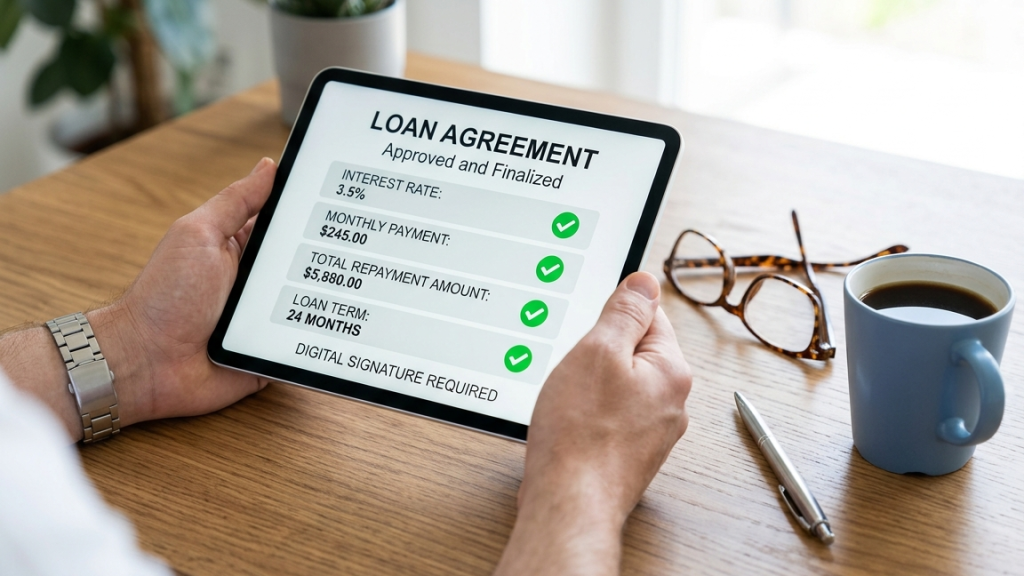
In the past, lenders would advertise a “zero percent” interest rate, but borrowers would later discover heavy processing fees and service charges. Under the latest rules, every digital lender must provide a Key Fact Statement (KFS) before you accept the loan. The KFS is a simple, one-page summary that clearly lists the exact loan amount, the processing fees, the penalty for late payments, and the Annual Percentage Rate (APR). The APR shows you the actual total cost of the loan, including all hidden fees. If a lender does not provide a KFS, you should not borrow from them.
2. The Introduction of the “Cooling-Off” Period
Have you ever taken a loan in a hurry and regretted it the next day? The latest digital lending updates include a mandatory “Cooling-Off” period. This gives borrowers a specific window of time (usually a few days) to return the principal amount and the proportionate interest without paying any heavy pre-closure penalties. This rule ensures that borrowers are not punished for making hasty financial decisions during an emergency.
3. Strict Rules for Data Privacy
Earlier, downloading a loan app meant giving it permission to read your entire contact list and view your photo gallery. This led to massive privacy violations. The newest regulations strictly prohibit loan apps from accessing your personal media or contacts. They can only ask for permissions that are absolutely necessary for the loan process, such as your camera (for a live selfie) and location (for fraud prevention). Your data cannot be shared with third-party marketing agencies without your explicit consent.
4. End of Aggressive Recovery Practices
The most relieving update for borrowers is the strict code of conduct for loan recovery. Digital lenders and their collection agents are now legally barred from calling borrowers at odd hours. Furthermore, threatening calls or messaging a borrower’s family and friends is entirely illegal. If a collection agent violates these rules, the lending company can lose its operational license.
Red Flags: How to Spot a Fake or Predatory Loan App
Despite the new rules, the internet is still populated with illegal, unregistered loan apps that operate outside the law. Borrowing from these platforms can lead to severe financial and mental stress. Here is a clear checklist to help you identify and avoid fake loan apps:
- No NBFC Partnership: Every legal loan app must be backed by a bank or a registered Non-Banking Financial Company (NBFC). If the app’s description or website does not clearly state its NBFC partner, it is likely a fraud.
- Asking for Advance Fees: A legitimate lender will deduct the processing fee from your total loan amount before transferring it to your bank. If an app asks you to pay a “security deposit” or “registration fee” upfront to unlock your loan, it is a scam.
- Unrealistic Repayment Terms: According to the latest guidelines, short-term loans should give borrowers a reasonable time to repay. If an app demands full repayment within three to seven days, it is a predatory app designed to charge you massive daily penalties.
- Poor Grammar and Unprofessional UI: Legal financial institutions spend millions on creating secure, well-designed applications. If an app is filled with spelling mistakes and looks poorly made, do not trust it with your PAN card and Aadhaar details.
Step-by-Step Guide to Applying for a Digital Loan Safely
If you find yourself in need of instant cash, follow these steps to ensure a safe and smooth borrowing experience:
Step 1: Compare the Annual Percentage Rate (APR)
Do not just look at the monthly interest rate. Check the APR of at least three different legal loan apps. The APR gives you the true cost of borrowing, making it easier to compare apples to apples.
Step 2: Read the App Permissions
Before hitting the “Install” button, scroll down to the “App Permissions” section on the Google Play Store or Apple App Store. Ensure the app is not asking for access to your contacts or personal files.
Step 3: Review the Repayment Schedule
Before accepting the loan offer, look at the EMI schedule. Calculate whether your monthly income can comfortably cover the EMI along with your regular living expenses.
Step 4: Keep Digital Records
Always take screenshots of the loan agreement, the Key Fact Statement, and every repayment receipt. In case of any technical glitch or dispute, having digital proof ensures that your issue is resolved quickly by the customer support team.

The Direct Impact of Instant Loans on Your Credit Score
Many people treat small instant cash loans casually, assuming that borrowing a tiny amount will not affect their overall financial profile. This is a massive misconception.
Digital lenders report every single transaction to major credit bureaus like CIBIL and Experian. Because these loans are heavily automated, even a single missed payment or a one-day delay is instantly recorded on your credit report. A drop in your credit score can seriously hurt your chances of getting a home loan or a car loan in the future.
On the positive side, if you take a small instant loan and repay it perfectly on time, it serves as a fantastic tool to quickly build or repair your credit score. Lenders love borrowers who demonstrate strong financial discipline with short-term, unsecured credit.
Frequently Asked Questions (FAQs)
Can I prepay my instant digital loan?
Yes, most legal lending apps now allow you to prepay or foreclose your loan. Thanks to the latest updates, many platforms have completely removed foreclosure charges, meaning you can clear your debt early and save money on interest. Always check the foreclosure policy in your KFS.
What happens if I miss an EMI due to a sudden job loss?
If you miss a payment, the lender will apply a late fee. However, under the new rules, the late fee must be reasonable and charged only on the overdue amount, not on the entire loan balance. It is highly recommended to contact the lender’s support team in advance if you anticipate a delay; many legal lenders offer a restructuring option for genuine cases.
Are digital loans safe for my data?
Yes, provided you use an app that is registered with the national financial regulator. Legal apps use bank-level encryption to protect your sensitive documents like your PAN card and bank statements.
Conclusion
Instant digital loans are no longer a risky, unregulated part of the internet. With the latest regulatory updates, the ecosystem has become incredibly safe, transparent, and borrower-friendly. The power is now entirely in your hands.
By understanding the importance of the Key Fact Statement, recognizing the red flags of fake apps, and maintaining absolute discipline with your repayments, you can use these modern financial tools to navigate emergencies with confidence. Borrowing money is a major responsibility; make sure you do it smartly, safely, and always for the right reasons.